# Morphware Documents

Welcome to Morphware Official Documentation and Help Resource.

{% hint style="info" %} <mark style="color:purple;">**NOTE:**</mark> Please remember that Morphware's documentation, including this [GitBook](https://docs.morphware.com/), may be updated periodically to provide you with the most current information. Keep this in mind when referring to our documentation for the latest details.
{% endhint %}

{% hint style="warning" %} <mark style="color:red;">**REMEMBER:**</mark> Morphware team members will never reach out to you first. Please [contact ](mailto:undefined)us if you have any questions or concerns.
{% endhint %}

{% hint style="success" %} <mark style="color:green;">**COMMUNITY:**</mark> Join our [Telegram ](https://t.me/morphwarecommunity)& [Twitter ](https://x.com/MorphwareAI)to get important announcements, updates and interact with the team and other community members.
{% endhint %}


# Abstract

Morphware is a pioneering solution designed to democratize the training of large-scale models, leveraging consumer-grade GPUs.  This initiative addresses a complex challenge that intersects various domains of computer science and mathematics, requiring an intricate understanding of diverse libraries and the synergy between them.

In the academic sphere, despite the presence of exceptional talent, the conundrum of efficiently training large models remains largely unresolved.  The prevailing academic culture, with its emphasis on specialized research and the pursuit for breakthroughs in publications, often overlooks the practical amalgamation of existing technologies for broader application.  Similarly, the tech industry, encompassing both behemoths and startups, frequently channels its resources towards the pursuit of cutting-edge technological advancements or short-term financial gains, neglecting the development of accessible methodologies for large model training.

Morphware is driven by a passion to connect cutting-edge research with real-world applications. Our team believes in bringing together diverse ideas to create practical solutions that make a difference. We're committed to advancing AI, open-source software, and public research because we believe these fields hold the key to unlocking a brighter future for everyone. By making it easier and more affordable to train powerful AI models, Morphware is breaking down barriers and empowering individuals and organizations to explore the full potential of machine learning.


# Web3 Client Acquisition

{% embed url="<https://drive.google.com/file/d/1zWcp0lFSdgozY84yBaKL2C85DtoXt7iD/preview>" %}


# Industry Specific Solutions

{% embed url="<https://drive.google.com/file/d/1XZ2SRz3F3mzn7e1e_tVjQ3g6qXdkTkW4/preview>" %}


# Competitive Analysis

{% embed url="<https://drive.google.com/file/d/1AA6Jm44Sz2YSTJan23uaIA9d_zoPUxgP/view?preview=>" %}


# Cloud Compute and API Integration

{% embed url="<https://drive.google.com/file/d/1Qinwtm1Tx18BtKRnI495xUEO7lSnaIuF/preview>" %}


# AI and Machine Learning Solutions

{% embed url="<https://drive.google.com/file/d/1lTkjPxeBVNHNh8zJXwr149ncnF2-crNV/preview>" %}


# API Docs

Documentation for all of Morphware API Endpoints

This document provides information about key API endpoints available in the Morphware Chat-UI application.

## Table of Contents

* [Credits](/api-docs/credits)
* [Pricing](/api-docs/pricing)
* [Chat Completions](/api-docs/chat-completion)
* [Ollama Embeddings](/api-docs/ollama-embeddings)
* [Image Generation](/api-docs/image-generation)

## Authentication

Most endpoints require authentication via a JWT token or Api Key. Include the token or Api Key in the Authorization header as:

```
Authorization: Bearer <your_jwt_token>
```

or

```
Authorization: Bearer <your_api_key>
```

To obtain a token, use the login endpoint, Auth authentication flow, or create an Api Key at app.morphware.com


# Credits

[**Authentication**](/api-docs#authentication): Required (JWT token or Api Key)

{% openapi src="/files/1xusbCaxXEN2KOTyJLPB" path="/api/credits" method="get" %}
[user\_credits\_api\_doc.yaml](https://1583485636-files.gitbook.io/~/files/v0/b/gitbook-x-prod.appspot.com/o/spaces%2FOGoMcCgzuGZjVkWo857x%2Fuploads%2Fmh8gtLGAXSVu4RSFIAMN%2Fuser_credits_api_doc.yaml?alt=media\&token=89fd76b4-1971-4638-8b24-d16257ba129b)
{% endopenapi %}


# Pricing

[**Authentication**](/api-docs#authentication): Required (JWT token or Api Key)

{% openapi src="/files/zO8lYDjeG2cvPeEMMW2U" path="/api/v1/pricing" method="get" %}
[pricing\_api\_doc.yaml](https://1583485636-files.gitbook.io/~/files/v0/b/gitbook-x-prod.appspot.com/o/spaces%2FOGoMcCgzuGZjVkWo857x%2Fuploads%2FyYruecSjoRF9wj8nnJDs%2Fpricing_api_doc.yaml?alt=media\&token=2ef29231-e43d-4936-be73-d4aa62d855f3)
{% endopenapi %}


# Chat Completion

[**Authentication**](/api-docs#authentication): Required (JWT token or Api Key)

{% openapi src="/files/pACfG8vlSY41cQogU0AE" path="/api/chat/completions" method="post" %}
[chat\_complete\_api\_docs.yaml](https://1583485636-files.gitbook.io/~/files/v0/b/gitbook-x-prod.appspot.com/o/spaces%2FOGoMcCgzuGZjVkWo857x%2Fuploads%2Fgz68Co9v11W7puVbYNUx%2Fchat_complete_api_docs.yaml?alt=media\&token=8e71a1f9-551a-4e8a-951b-2c6677c8c489)
{% endopenapi %}


# Ollama Embeddings

[**Authentication**](/api-docs#authentication): Required (JWT token or Api Key)

{% openapi src="/files/FBtKEawZ7eSAnSQ70N2X" path="/ollama/api/embeddings" method="post" %}
[embeddings\_api\_doc.yaml](https://1583485636-files.gitbook.io/~/files/v0/b/gitbook-x-prod.appspot.com/o/spaces%2FOGoMcCgzuGZjVkWo857x%2Fuploads%2Fjcpg1O1vCTax6GzyUpmI%2Fembeddings_api_doc.yaml?alt=media\&token=98e52f5f-ecb4-4a7c-bddf-04d6a450ed7f)
{% endopenapi %}


# Image Generation

{% openapi src="/files/SmZcc9lWK3G2erJu2P9v" path="/images/api/v1/generations" method="post" %}
[image\_generation\_docs.yaml](https://1583485636-files.gitbook.io/~/files/v0/b/gitbook-x-prod.appspot.com/o/spaces%2FOGoMcCgzuGZjVkWo857x%2Fuploads%2FC3M1fp7bAtmDd5iDiRfO%2Fimage_generation_docs.yaml?alt=media\&token=0d367401-12e0-4dde-a4d6-ff35751aee68)
{% endopenapi %}


# Introduction

## Background

At the heart of machine learning's evolution is the development of increasingly sophisticated models that require vast amounts of data and computational resources to train.  This requirement presents a significant barrier to entry for individual researchers and small organizations, limiting the democratization of AI development and stifling innovation.  Similarly, the cryptocurrency mining industry faces its own set of challenges, with escalating competition and rising costs rendering mining operations increasingly unfeasible for the average participant.  Moreover, the environmental impact of these computationally intensive activities has become a pressing concern, highlighting the urgent need for solutions that prioritize sustainability without compromising efficiency.

### The Centralization Dilemma

Traditionally, the demand for computational power in both ML model training and cryptocurrency mining has been met by centralized cloud computing services.  While effective to a degree, this centralization presents multiple drawbacks, including high costs, potential for service outages, and concerns over data privacy and security.  Furthermore, the centralized model concentrates power among a few large corporations, creating monopolies that can stifle competition and innovation.  Additionally, the environmental footprint of massive data centers, often powered by non-renewable energy sources, exacerbates the sustainability issue, calling into question the long-term viability of this approach.

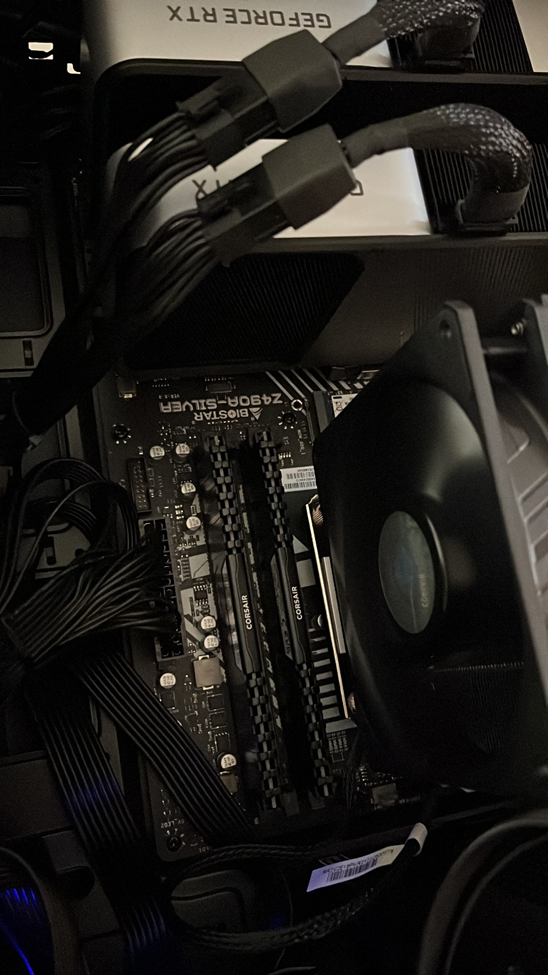
<figure><img src="/files/up5SMVSUyhru9eeoOWqv" alt=""><figcaption><p><em><strong>Figure 0.  A worker node on the Morphware network.</strong></em></p></figcaption></figure>

### Introducing Morphware

Morphware represents a paradigm shift in the provision of computational resources, designed to overcome the limitations of centralization by harnessing the power of decentralization and blockchain technology.  By creating a peer-to-peer network that connects data scientists and cryptocurrency miners with GPU owners worldwide, Morphware facilitates the efficient, secure, and cost-effective execution of computational tasks.  This approach not only democratizes access to computational resources but also encourages the utilization of idle computing capacity, thereby optimizing resource allocation and reducing waste.

### **Core Principles of Morphware**

* **Embracing AI Advancements:** Morphware is committed to harnessing the power of Artificial Intelligence (AI) to drive growth, improve experiences, and foster a culture of innovation within our community. By leveraging cutting-edge AI technologies, we strive to stay ahead of the curve, make informed decisions, provide intuitive interfaces, and encourage experimentation among developers and researchers.
* **Decentralization:** By distributing computational tasks across a global network, Morphware ensures resilience, scalability, and accessibility, empowering participants regardless of their geographical location or economic status.
* **Sustainability:** Committed to minimizing the environmental impact of computational activities, Morphware leverages renewable energy sources and employs carbon offsetting measures to achieve a net-positive ecological footprint.
* **Innovation and Democratization:** Morphware's tokenomics and governance model incentivize contributions and ensure that value is equitably distributed among those who contribute to the network's success, fostering a culture of innovation and collaboration.

Through Morphware, we envision a future where computational resources are no longer a bottleneck for innovation but a catalyst for progress, available to all who seek to push the boundaries of what is possible in machine learning and blockchain development.


# Team

Morphware's emergence as a trailblazer in the decentralized computational resource market is not just a testament to its innovative business model and sustainable approach but also to the unique blend of expertise and vision brought by its founding team. This diverse group of professionals, with their deep roots in blockchain technology, software engineering, community development, artificial intelligence, and hardware innovation, positions Morphware at the intersection of technology and sustainability.

### LinkedIn Profiles

* Kenso Trabing: <https://www.linkedin.com/in/trabing/>
* Darshan Raju: <https://www.linkedin.com/in/darshan-raju-bb3069164/>
* Anthony Albertorio: <https://www.linkedin.com/in/anthonyalbertorio/>
* Khai Win: <https://www.linkedin.com/in/khai-resilient-mindset/>
* Immanu'el Segol: <https://www.linkedin.com/in/immanuelsegol/>
* Asim Jan: <https://www.linkedin.com/in/asimjan>
* Chris Mallalieu: <https://www.linkedin.com/in/christopher-mallalieu/>

### Foundational Expertise and Leadership

Kenso Trabing is the founder and the driving force behind Morphware.  Before starting Morphware, Kenso worked as a senior data scientist at a blockchain-focused venture studio.  Before that, he taught blockchain development the Princeton Quant Conference and Yale Blockchain Bootcamp.

### Technical Prowess and Innovation

Darshan Raju, Morphware’s Tech Lead, contributes contemporary technical acumen honed at Microsoft, where he developed internal tools for Azure, and Byte Dance, where he works on TikTok.  Darshan's expertise in software engineering and his experience in developing scalable solutions underpin Morphware's technical strategy, ensuring the platform's robustness and reliability.

### Community Engagement and Development

Anthony Albertorio, Morphware’s Community Lead, is instrumental in fostering Morphware's vibrant and inclusive community. His background in developer relations at zkSync and community development at ConsenSys provides Anthony with a unique perspective on building and nurturing ecosystems that thrive on collaboration and shared goals. His role is critical in ensuring Morphware remains attuned to the needs and aspirations of its users and contributors.

### Leading Edge in AI and Data Science

Asim Jan, Morphware’s Artificial Intelligence Lead, is an experienced AI consultant who has successfully managed high-value AI projects at Shell, deploying innovative solutions in real-time image processing and edge computing. Asim has a PhD in AI and has a proven ability to bring AI projects from research to a production environment. He also specialises in building the engineering infrastructure to power the AI models at scale.

### Hardware Innovation and Cryptography

Immanu'el Segol, Morphware’s Hardware Lead, rounds out the team with his expertise in firmware development and a keen focus on accelerating Zero-Knowledge Proof (ZKP) cryptography.  His experience at PayPal, working on stablecoin technology, and at a hardware startup, where he worked on the popular ZKP software package Icicle, emphasizes his proficiency in creating secure and innovative hardware solutions.  Immanu'el's contributions are vital in ensuring Morphware's infrastructure is not only cutting-edge but also secure and trustworthy.

### Distinctive Competencies

The distinctive competencies of Morphware lie in its founding team's collective expertise, which spans the critical domains of blockchain technology, software engineering, community engagement, artificial intelligence, and hardware development.  This multidisciplinary team's ability to synergize their skills and experiences underlines Morphware's capacity to revolutionize the computational resource market, making it more accessible, efficient, and sustainable.  As Morphware continues to grow and evolve, the team's vision and leadership will remain its most valuable asset, driving innovation and fostering a community that shares its commitment to reshaping the future of decentralized computing.<br>


# Roadmap

<figure><img src="/files/iLQqxCQOj20bvuE5LQIr" alt=""><figcaption></figcaption></figure>


# Problem

## Overview

The evolution of digital technology has propelled the fields of machine learning (ML) and cryptocurrency to the forefront of innovation, driving significant advancements and reshaping industries. However, this rapid growth has illuminated critical challenges related to computational resource allocation, accessibility, sustainability, and the centralization of power and control. These challenges not only hinder further progress but also pose ethical and environmental concerns that demand immediate attention and innovative solutions.

<figure><img src="/files/HyfLT2J11RB7zxuSfmvm" alt=""><figcaption><p><em>Figure 1.  The demand for compute is outstripping supply.</em></p></figcaption></figure>

## The Growing Demand for Compute

The computational capacity required to train a state-of-the-art machine learning model is doubling approximately every eighteen months\[need citation], while the number of transistors on a densely integrated circuit is doubling approximately every eighteen months\[need citation]; which is also known as Moore’s law (see: Figure 1).  These models, however, require significant computational resources for training, often involving large datasets and complex neural network architectures.  The high cost and limited availability of these resources create barriers that restrict the advancement of ML research and development to well-funded organizations, leaving individual researchers and smaller entities at a disadvantage.  This limitation stifles innovation and narrows the field of contributors, undermining the potential for diverse and rapid advancements in AI.

## The Challenges of Cryptocurrency Mining

Cryptocurrency mining, a process critical for validating transactions and securing blockchain networks, is similarly resource-intensive.  The Proof of Work (PoW) mechanism, used by many cryptocurrencies, requires miners to solve complex mathematical problems, a process that consumes vast amounts of electricity.  As the difficulty of these problems increases, so does the demand for more powerful and energy-intensive mining rigs.  This escalation leads to significant environmental impacts due to the carbon footprint associated with energy consumption, particularly in regions where electricity is generated from non-renewable sources.  Furthermore, the concentration of mining power among large-scale operations exacerbates economic disparities within the cryptocurrency community, making mining less viable for individual enthusiasts and small groups.

## Centralization: A Double-Edged Sword

Centralized cloud computing services have emerged as a primary solution to the computational demands of both ML and cryptocurrency mining.  While these services offer scalability and reliability, they come with their own set of challenges.  High costs, potential data privacy and security issues, and the risk of service outages are significant concerns.  Moreover, the centralization of computational resources in the hands of a few corporations leads to monopolistic control, limiting competition and innovation.  This centralization also contributes to environmental degradation, as data centers are often powered by non-renewable energy sources, further compounding the sustainability issue.

## The Quest for Sustainable, Decentralized Solutions

The intersection of these challenges underscores the urgent need for innovative approaches that prioritize accessibility, sustainability, and the democratization of computational resources.  A solution that leverages the untapped potential of latent computing capacity across the globe, while minimizing environmental impacts and fostering a more equitable distribution of resources, could revolutionize the fields of machine learning and cryptocurrency mining.

Morphware presents such a solution, embodying a radical departure from traditional models through its decentralized network that connects data scientists and cryptocurrency miners with a global pool of GPU owners.  By harnessing blockchain technology, Morphware not only facilitates efficient and secure computational transactions but also embodies a commitment to sustainability and innovation.


# Solution

Morphware introduces a groundbreaking approach to the challenges faced in the realms of machine learning model training and cryptocurrency mining. By creating a decentralized network that leverages underutilized global computing resources, Morphware not only addresses the immediate need for computational power but also lays the foundation for a more sustainable, accessible, and equitable digital future.

<figure><img src="/files/xxbrQ1DA3I1O7PkKZGHi" alt=""><figcaption><p><em>Figure 2.  Mock-up of Morphware’s modular approach to datacenter design.</em></p></figcaption></figure>

## Decentralizing Computational Resources

At its core, Morphware operates on the principle of decentralization, utilizing blockchain technology to create a secure, efficient, and transparent network.  This network connects individuals and organizations in need of computational resources (data scientists, ML engineers, and cryptocurrency miners) with those possessing idle GPU power (GPU owners across the globe).  This peer-to-peer model facilitates direct transactions without the need for intermediaries, drastically reducing costs and enhancing access to necessary computational capabilities.

## A Dual Business Line Approach

Morphware distinguishes itself by serving two primary business lines:

* **Machine Learning Model Training:** Morphware provides ML practitioners with affordable access to the computational power needed to train complex models. By distributing the training process across multiple GPUs in the network, tasks that were once prohibitive due to cost or hardware limitations become feasible, democratizing AI research and development.
* **Cryptocurrency Mining:** Morphware revitalizes the cryptocurrency mining landscape by offering an alternative to traditional mining operations. Through the network, individuals can contribute their GPU power for mining operations, earning rewards in the process. This model not only makes mining more accessible but also more environmentally friendly by optimizing the use of existing resources.

## Penetrative Pricing Model

<figure><img src="/files/8OnKqPEkiu8Ip9x1Y1Rq" alt=""><figcaption><p><em>Figure 3.  Earning Morphware algorithmically priced to stay within this price-band.</em></p></figcaption></figure>

## Strategic Pricing Model for Competitive Advantage

Morphware introduces a disruptive approach to the computational market through its penetrative pricing model, meticulously designed to offer unmatched cost efficiency for large-scale model training while simultaneously ensuring profitability surpasses that of conventional cryptocurrency mining. This innovative pricing strategy not only positions Morphware as a formidable competitor against traditional cloud service providers but also redefines the economic landscape of computational resource utilization.

<figure><img src="/files/3cFwTUHxZkPVWrMDVqEu" alt=""><figcaption><p><em>Figure X.  Household electricity prices worldwide in June 2023, by select country(in U.S. dollars per kilowatt-hour)</em></p></figcaption></figure>

### Penetrative Pricing Strategy

* **Undercutting Market Prices:** Morphware aims to attract a broad user base by setting service prices significantly lower than those of existing cloud services and specialized AI training platforms. This approach is designed to make large-scale AI model training accessible to a wider range of users, including independent researchers, startups, and academic institutions, who are often priced out of the market by high costs.
* **Optimizing Operational Costs:** The strategic location of Morphware's operations in Paraguay, leveraging the country's abundant and cost-effective renewable energy sources, plays a pivotal role in minimizing operational expenses. Combined with the use of consumer-grade GPUs and ASICs, which are more cost-efficient than their enterprise-grade counterparts, Morphware achieves a lower cost base, enabling the company to adopt its penetrative pricing model without compromising on profitability.

### Ensuring Profitability Beyond Crypto Mining

* **Dynamic Resource Allocation:** Morphware's business model goes beyond static resource deployment for cryptocurrency mining. By dynamically allocating computational resources between AI model training and cryptocurrency mining based on real-time profitability metrics, Morphware ensures optimal utilization of its assets. This flexibility allows Morphware to pivot towards the most lucrative operations at any given time, maximizing revenue generation.
* **Value Proposition for AI Development:** The pricing model is designed not only to cover operational costs but also to generate profits by providing value-added services for AI development. This includes offering bespoke computational solutions, premium access to specialized AI training tools, and collaborative opportunities for model development and deployment. The added value attracts users willing to pay a premium for these specialized services, further enhancing Morphware's revenue streams.
* **Long-term Customer Engagement:** By offering competitively priced services initially, Morphware aims to build a loyal user base. Over time, as users become entrenched in the Morphware ecosystem, opportunities arise to introduce additional paid features and services, further diversifying revenue sources and increasing profitability.

<figure><img src="/files/A4WejCrQ1rW7TGlJeYfC" alt=""><figcaption><p><em>Figure 4.  A snapshot from the development process of Morphware’s LLM-focused product.</em></p></figcaption></figure>

## Impact on the Computational Market

Morphware's penetrative pricing model challenges the status quo of the computational market. By demonstrating that it is possible to offer competitively priced AI training services while maintaining profitability, Morphware sets a new benchmark for cost efficiency in the industry. This approach has the potential to drive down prices across the board, making large-scale computational tasks more accessible and encouraging innovation in AI development.

The strategic decision to undercut competitors on price, combined with the ability to maintain higher profitability than traditional cryptocurrency mining, illustrates Morphware's commitment to fostering accessibility and innovation in AI development. As the model proves successful, it could catalyze a shift in how computational resources are priced and utilized, leading to a more inclusive and dynamic market.

Morphware's penetrative pricing model represents a calculated move to disrupt the computational services market, offering an unprecedented blend of affordability, flexibility, and profitability. By reimagining the economics of computational resource utilization, Morphware not only enhances its competitive edge but also contributes to the democratization of technology and the advancement of AI research and development.<br>

## Leveraging Renewable Energy and Advanced Technology

Morphware's commitment to sustainability is evident in its strategic choice of Paraguay as the site for its superpeer datacenter. By capitalizing on Paraguay's abundant and cheap renewable energy sources, Morphware significantly reduces the carbon footprint associated with high-intensity computing tasks. Furthermore, the deployment of state-of-the-art Nvidia Blackwell GPUs ensures unparalleled efficiency and performance, setting new standards in computational processing.

## Innovating Through Tokenomics and Governance

Morphware's innovative tokenomics model is designed to reward contributors fairly and equitably, ensuring that those who add value to the network are compensated. The integration of ERC20Permit and ERC20Votes facilitates advanced governance mechanisms, allowing the community to participate actively in decision-making processes. This approach not only incentivizes participation but also aligns the network's development with the interests and needs of its users.

<figure><img src="/files/Wl6GEcZFcyCnwrg84hzB" alt=""><figcaption><p><em>Figure 5.  Site layout of one module.</em></p></figcaption></figure>

## A Modular and Scalable Infrastructure

Understanding the dynamic nature of computational demands, Morphware adopts a modular approach to its infrastructure. This flexibility allows for scalable growth, adapting to the evolving needs of the network while maintaining resilience and efficiency. By distributing its operations across multiple substations, Morphware ensures uninterrupted service and broadens its potential for expansion.

## Realizing the Vision

Morphware's solution transcends the traditional barriers of cost, accessibility, and sustainability in computational resource allocation. Through its decentralized network, innovative use of technology, and commitment to environmental stewardship, Morphware is poised to transform the landscapes of machine learning model training and cryptocurrency mining. This whitepaper delves deeper into the mechanics of Morphware's operation, exploring the technical foundation, operational dynamics, and the strategic vision that guide its journey towards redefining the future of decentralized computing.


# Token

<figure><img src="/files/rAlQFYMKSfwCJzha23ca" alt=""><figcaption><p><em>Figure 6.  Morphware.sol</em></p></figcaption></figure>

## Maximum Supply

The constructor in the provided Solidity smart contract for Morphware performs several key actions upon the deployment of the contract to the Ethereum blockchain.

### Constructor Declaration and Inheritance

* **Inheritance Initializers:** The constructor initializes the contract with features inherited from the OpenZeppelin Contracts library. Specifically, it calls the constructors of the ERC20 and ERC20Permit base contracts.
* **ERC20("Morphware", "MOR"):** This initializes the ERC20 token by setting its name to "Morphware" and its symbol to "MOR". The ERC20 contract is a standard implementation of an Ethereum token that follows the ERC-20 token standard, providing basic functionality for transferring tokens, as well as keeping track of token balances.
* **ERC20Permit("Morphware"):** This initializes the ERC20Permit extension with the name "Morphware". ERC20Permit is an extension that allows token holders to use their tokens without paying gas fees directly, by permitting another user to spend tokens on their behalf. This is done using a cryptographic signature, as defined in EIP-2612. The parameter typically represents the name used to uniquely identify the permit, which is important for off-chain signing purposes.

### Minting Initial Supply

After initializing the inherited contracts, the constructor proceeds to mint an initial supply of tokens.  For the purpose of minting 1,232,922,769 MOR tokens to the deployer's address, the following line is essentially what occurs within the constructor:

* **\_mint(msg.sender, 1232922769 \* (10  uint256(decimals())));:**  This line mints the specified number of MOR tokens to the address deploying the contract (msg.sender).  The amount of tokens to be minted is adjusted by the token's decimals, ensuring that the minted amount adheres to the ERC-20 token's divisibility.  The \_mint function is a protected function provided by the ERC20 implementation of OpenZeppelin, designed to create a given amount of tokens and assign them to an account, increasing the total supply.

### Initialization

The constructor in the Morphware contract is used to initialize the contract with specific parameters for the ERC20 and ERC20Permit functionalities and to mint an initial supply of tokens.  This initial setup is crucial for defining the token's characteristics and for distributing the initial tokens to the contract deployer, setting the stage for the token's distribution and usage on the blockchain.

## ERC20Votes-related Overrides

In Solidity, when a contract inherits from multiple contracts that have functions with the same name, or when a contract implements an interface that inherits from multiple interfaces with function name collisions, you must explicitly override these functions in the derived contract to resolve the ambiguity. The \`override\` keyword is used to indicate that a function overrides one or more functions from base contracts or interfaces. In the context of the Morphware smart contract, which inherits from \`ERC20\`, \`ERC20Burnable\`, \`ERC20Permit\`, and \`ERC20Votes\` (all part of the OpenZeppelin Contracts library), specific overrides are required for a couple of reasons:

### \`\_update\` Function

The \`\_update\` function is an internal function used to hook into the token transfer process, enabling additional logic to be executed whenever tokens are transferred, minted, or burned. In this case:

* Both \`ERC20\` and \`ERC20Votes\` contracts might define their own \`\_update\` logic. \`ERC20Votes\` uses it to manage vote balances as tokens are transferred (since voting power is typically tied to token balance), ensuring that vote delegations are accurately accounted for when tokens move between addresses.
* By overriding \`\_update\`, the \`Morphware\` contract integrates the functionality of both base contracts, ensuring that the voting power is correctly updated in response to token transfers. This is crucial for maintaining the integrity of the voting system tied to the token balances.

### \`nonces\` Function

The \`nonces\` function is part of the \`ERC20Permit\` functionality, which allows for gasless transactions by using EIP-2612's permit mechanism:

* The \`ERC20Permit\` extension requires tracking nonces for each token holder to prevent replay attacks on permit-based approvals.
* Since \`ERC20Permit\` and potentially another contract (mistakenly mentioned as \`Nonces\` in the override, but likely intended to indicate another source defining \`nonces\` function, or simply a mistake in referencing) could define a \`nonces\` function, it's necessary to explicitly override it in the \`Morphware\` contract to specify how nonces are handled and returned for each owner.
* This ensures that the gasless approval mechanism works securely and reliably, by properly incrementing and tracking the nonce for each account that uses \`permit\`.

In summary, these overrides are necessary to combine and correctly execute the logic of inherited behaviors from multiple base contracts (\`ERC20\`, \`ERC20Burnable\`, \`ERC20Permit\`, and \`ERC20Votes\`) in a coherent and consistent manner, ensuring that token transfers, burns, and permit-based operations interact seamlessly with the voting mechanism within the \`Morphware\` contract.


# Tokenomics

Morphware's tokenomics are meticulously designed to align with its overarching vision of decentralizing computational resources, fostering innovation in machine learning and cryptocurrency mining, and promoting a sustainable and equitable digital ecosystem. The structure of token distribution, rewards, and governance encapsulates Morphware's commitment to its community and the long-term viability of the project.

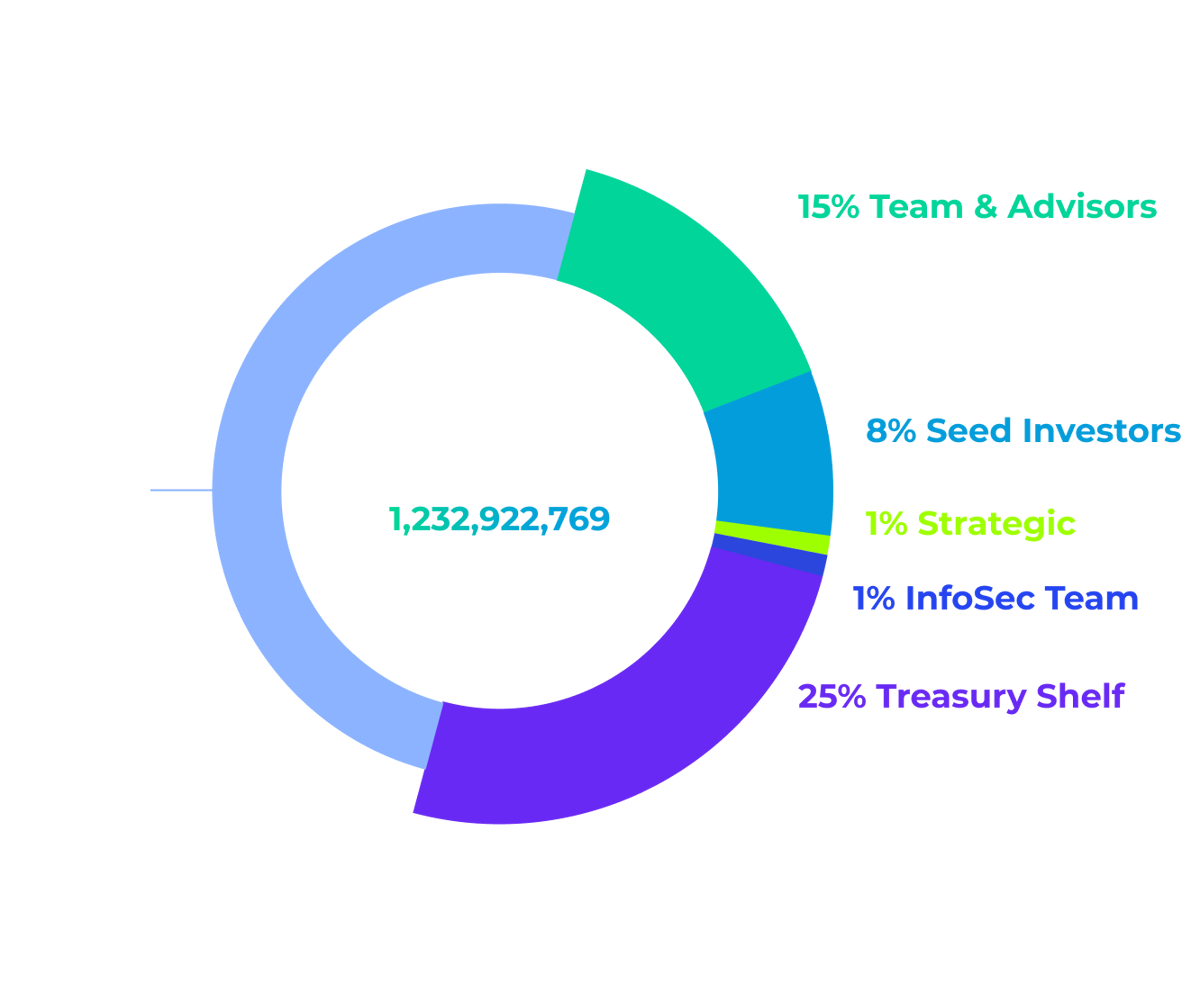
Total Tokens: 1,232,922,769 XMW

<figure><img src="/files/DnafCNYbvfrnwilPahRW" alt=""><figcaption></figcaption></figure>

|                 | Allocation | Vesting                                        |
| --------------- | ---------- | ---------------------------------------------- |
| Team & Advisors | 15%        | 9 Months Cliff, Monthly Vesting over 18 Months |
| Seed Investors  | 8%         | Unlocked                                       |
| Strategic       | 1%         | Monthly Vesting over 1 Year                    |
| InfoSec Team    | 1%         | Monthly Vesting over 1 Year                    |
| Treasury Shelf  | 25%        |                                                |
| Liquidity       | 50%        |                                                |

### Initial Token Generation Event (TGE)

At the heart of Morphware's tokenomics is the strategic decision to have 58% of its tokens in circulation at the time of the Token Generation Event (TGE). This significant initial liquidity is a testament to Morphware's dedication to fostering an active and engaged community from the outset. By ensuring a substantial portion of tokens is available to the public, Morphware aims to promote widespread participation and ownership within its ecosystem.

### Allocation Strategy

The allocation of Morphware tokens is carefully planned to support the project's growth and sustainability. The strategy includes:

* **Strategic Sale and Seed Sale**: A portion of the tokens is allocated for early adopters and original investors, providing the necessary capital infusion for the project's development and expansion.
* **Community Rewards and Incentives:** To encourage participation and contribution to the network, a significant allocation is dedicated to community rewards and incentives. This includes compensations for GPU owners contributing their computational power, developers building on the platform, and users participating in governance.
* **Team and Advisors:** Recognizing the importance of the founding team and advisors, a portion of the tokens is reserved for them, subject to vesting periods that align their interests with the long-term success of the project.
* **Development and Operational Reserve:** To ensure the continuous improvement and operational excellence of the platform, tokens are reserved for future development, partnerships, and unforeseen operational needs.

### Governance and Participation

The introduction of ERC20Votes within Morphware's tokenomics framework underscores the project's commitment to decentralized governance. Token holders are empowered to participate in key decision-making processes, including protocol upgrades, resource allocation, and strategic partnerships. This democratic approach ensures that Morphware evolves in alignment with the community's interests and the changing landscape of decentralized computing.

### Sustainable Growth and Incentive Mechanisms

Morphware's tokenomics includes innovative mechanisms designed to reward contributions, ensure network security, and promote sustainable growth. The distribution schedule, coupled with incentive structures for both computational contributions and governance participation, ensures that stakeholders are motivated to contribute to the ecosystem's health and vitality over the long term.


# Potential

The landscape of computational resource demand, underscored by the relentless growth in machine learning applications and cryptocurrency mining, presents a burgeoning market ripe with opportunities. Morphware’s decentralized network is strategically positioned to tap into this potential, offering a solution that aligns with the trajectory of digital innovation and the evolving needs of a broad spectrum of users.

### Exponential Growth in Machine Learning

The machine learning market is experiencing an exponential surge, driven by advancements in artificial intelligence that demand ever-increasing computational power. Research indicates that the global machine learning market size is projected to reach significant growth by 2025, expanding at a compound annual growth rate (CAGR) that underscores the critical role of computational resources in fueling this expansion. Morphware, with its decentralized approach to providing computational power, is not just participating in this market growth; it is facilitating it, ensuring that the barriers to entry for developing state-of-the-art machine learning models are significantly lowered.

### The Cryptocurrency Mining Renaissance

Cryptocurrency mining, despite its challenges, continues to represent a significant sector within the blockchain ecosystem. The transition towards more energy-efficient consensus mechanisms, like Proof of Stake, does not diminish the need for computational resources but rather shifts the focus towards versatility and sustainability. Morphware revitalizes the mining sector by offering a platform where GPU owners can contribute to mining operations without the prohibitive costs of traditional mining rigs, making mining more accessible and environmentally sustainable. This approach taps into the latent potential of idle GPUs, creating a more balanced and inclusive mining community.

### Decentralization as a Market Driver

The shift towards decentralization, a trend gaining momentum across various technological domains, represents a broader market shift that Morphware is well-equipped to lead. As more organizations and individuals recognize the benefits of decentralized systems — such as enhanced security, reduced costs, and increased transparency — the demand for platforms like Morphware that embody these principles is set to rise. This trend is not just a temporary market fluctuation but a fundamental change in how computational resources are consumed and provided.

### Sustainability and Social Responsibility

The increasing societal emphasis on sustainability and social responsibility represents a significant market opportunity for Morphware. With its focus on using renewable energy sources and reducing the carbon footprint of computational tasks, Morphware appeals to a growing segment of environmentally conscious consumers and organizations. This alignment with global sustainability goals not only positions Morphware as a market leader in ethical computing but also opens up avenues for partnerships and collaborations with like-minded entities, further expanding its market potential.

### Looking Ahead: The Future of Computational Markets

As we look to the future, the intersection of machine learning, cryptocurrency, and decentralized technologies is poised to redefine the landscape of digital innovation. Morphware, with its pioneering approach and scalable infrastructure, is not just poised to capture a significant share of this burgeoning market but to drive its evolution. The potential for growth in this space is limited only by the availability and accessibility of computational resources — a challenge that Morphware turns into an opportunity, setting the stage for a future where the power of computation is within reach for everyone, everywhere.

In the subsequent sections, this whitepaper will delve deeper into the technical and operational specifics of Morphware, outlining how it not only meets the current market demand but also anticipates and shapes the future directions of computational resource allocation.


# Governance and Community Engagement

Morphware's approach to governance and community engagement is designed to embody the principles of transparency, inclusivity, and collective decision-making. Recognizing the crucial role that an active and engaged community plays in the success of decentralized projects, Morphware integrates advanced governance mechanisms and community-focused initiatives to ensure that the platform remains responsive, dynamic, and aligned with the needs and aspirations of its stakeholders.

### Decentralized Governance Model

At the core of Morphware's governance model is the implementation of ERC20Votes, a framework that enables token-based voting on key decisions affecting the platform. This mechanism allows token holders to directly influence the strategic direction of Morphware, from protocol upgrades and feature implementations to tokenomics adjustments and partnership strategies. The model is designed to:

* **Empower Community Voices:** By tying governance rights to token ownership, Morphware ensures that those invested in the platform's success have a say in its operations and development.
* **Ensure Transparency and Accountability:** All proposals, discussions, and voting outcomes are recorded on the blockchain, providing a transparent and immutable record of governance activities.
* **Facilitate Dynamic Adaptation:** The decentralized governance framework allows Morphware to swiftly adapt to changing market conditions, technological advancements, and community preferences, ensuring its long-term resilience and relevance.

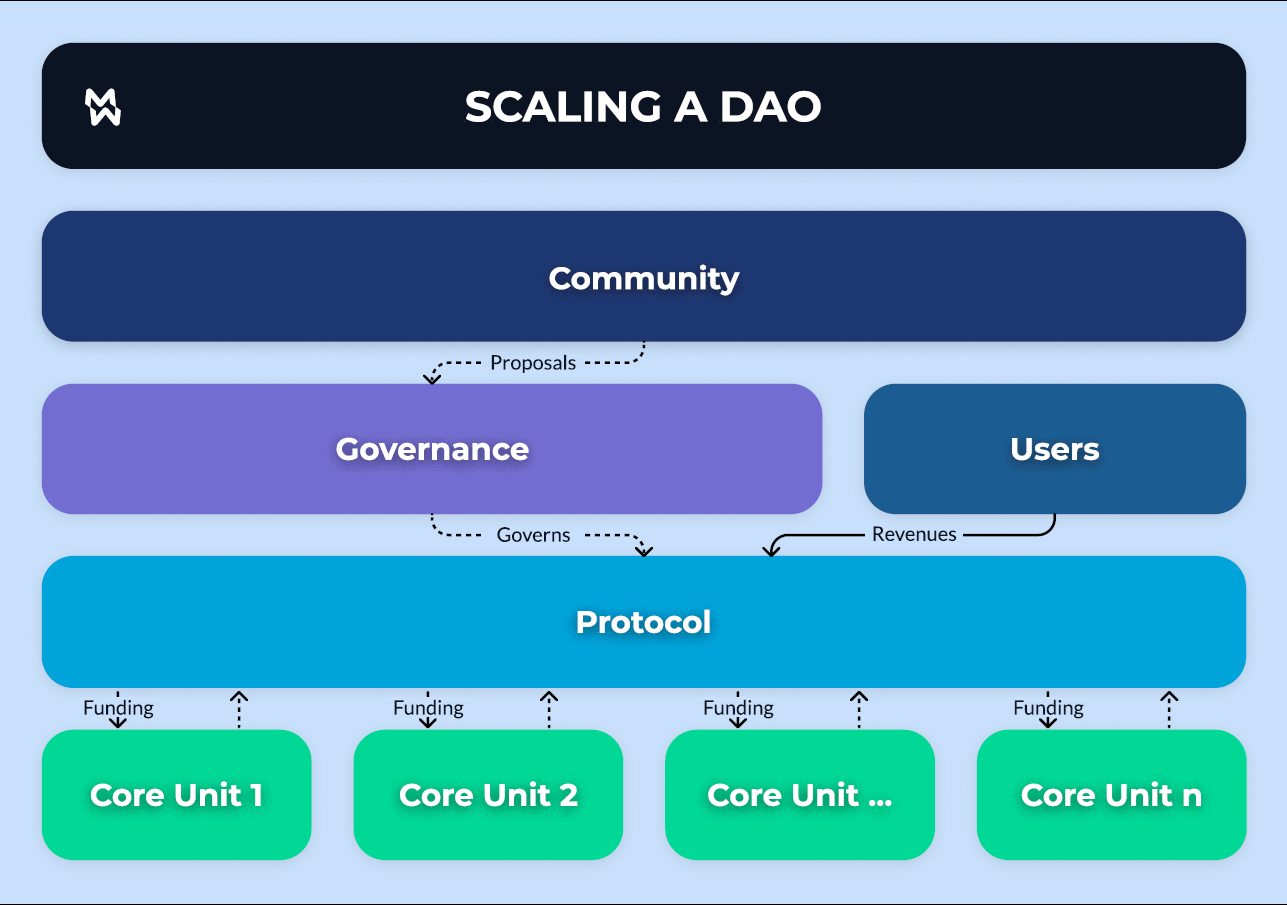
<figure><img src="/files/e6W8fgam2evK1J5jL7Er" alt=""><figcaption><p><em>Figure 8.  The interrelationships between protocols, users, core units, and communities.</em></p></figcaption></figure>

### Community Development and Engagement Initiatives

Understanding that a vibrant community is the lifeblood of any decentralized project, Morphware places a strong emphasis on community development and engagement. Through a variety of initiatives, the platform seeks to cultivate a sense of ownership, collaboration, and shared purpose among its users and contributors:

* **Educational Programs:** Morphware commits to educating its community about the platform's technology, the potential of decentralized computing, and the principles of blockchain governance. This includes workshops, webinars, and online resources tailored to various skill levels.
* **Incentive Programs:** To encourage active participation and contribution, Morphware launches incentive programs that reward community members for tasks such as onboarding new users, developing applications on the platform, and participating in governance votes.
* **Feedback Loops:** Regular community calls, surveys, and forums are established to gather feedback, address concerns, and solicit ideas for improvement. These feedback loops ensure that the community's voice directly shapes the platform's evolution.
* **Collaboration Spaces:** Morphware fosters a collaborative ecosystem by providing tools and spaces for community members to work together on projects, share knowledge, and support each other's initiatives.

### Ensuring Sustainable Community Growth

Morphware's governance and community engagement strategies are designed not only to empower its current users but also to attract new participants to the ecosystem. By demonstrating a commitment to inclusivity, responsiveness, and shared success, Morphware aims to grow its community sustainably, ensuring a diverse and vibrant network of supporters who are invested in the platform's long-term vision.

### Towards Decentralization

Governance and community engagement are foundational pillars of Morphware's strategy to build a decentralized computational resource ecosystem that is truly by and for its users.  By prioritizing transparency, inclusivity, and active participation, Morphware sets a new standard for decentralized project governance, ensuring that it remains agile, responsive, and driven by the collective will of its community.  As Morphware continues to evolve, its commitment to these principles will be key to fostering a thriving ecosystem that empowers individuals and organizations to unlock the full potential of decentralized computing.


# Conclusion

Morphware embarks on a transformative journey to redefine the landscape of computational resources through a vision that marries technological innovation with sustainability, community empowerment, and decentralized governance.  As outlined in this whitepaper, Morphware's strategic roadmap, from the beginning of its equipment sourcing in 2024 to its pivotal transition to a DAO in 2029, illustrates a phased approach that prioritizes scalability, inclusivity, and environmental responsibility.

At its core, Morphware seeks to democratize access to computational power, enabling groundbreaking advancements in machine learning and providing a sustainable alternative to traditional cryptocurrency mining practices.  By leveraging a decentralized network of global GPU resources and adopting renewable energy sources, Morphware not only addresses the environmental impact of digital innovation but also paves the way for a future where technological progress does not come at the cost of our planet.

The introduction of Morphware's tokenomics and governance models represents a commitment to creating a platform that is not only efficient and secure but also fair and transparent.  The platform's emphasis on community engagement and participation ensures that Morphware evolves in alignment with the needs and aspirations of its users, fostering a vibrant ecosystem where innovation flourishes.

As we look ahead, the transition to a DAO marks a significant milestone in Morphware's journey, embodying the ultimate expression of decentralization and community governance.  This shift underscores Morphware's dedication to building a platform that is truly of the people, by the people, and for the people, ensuring that the digital revolution remains accessible, equitable, and sustainable for generations to come.

Morphware stands at the intersection of technological advancement and environmental stewardship, offering a beacon of hope for a future where the boundless potential of decentralized computing is harnessed to drive positive change.  As Morphware continues to grow and evolve, it invites us all to be part of this exciting journey towards creating a more inclusive, sustainable, and empowered digital world.